Wednesday, 4 December 2019

Fostering jobs, entrepreneurship, and capacity development for African youth: the time for disruption is now!

Fostering jobs, entrepreneurship, and capacity development for African youth: the time for disruption is now!


AfDB NEWS & EVENTS
OpEd by Hanan Morsy*
04-Dec-2019
“There is no greater asset to Africa than its youth,” a statement that has been repeatedly proclaimed, but the continent still has a long way to go. Despite robust economic growth over the past two decades, a 1 percent increase in growth between 2000–14 was associated with only 0.41 percent growth in employment. This figure suggests that employment stood at less than 1.8 percent a year, far below the nearly 3 percent annual growth in the labor force. If this trend continues, 100 million people will join the multitudes of the unemployed in Africa by 2030.
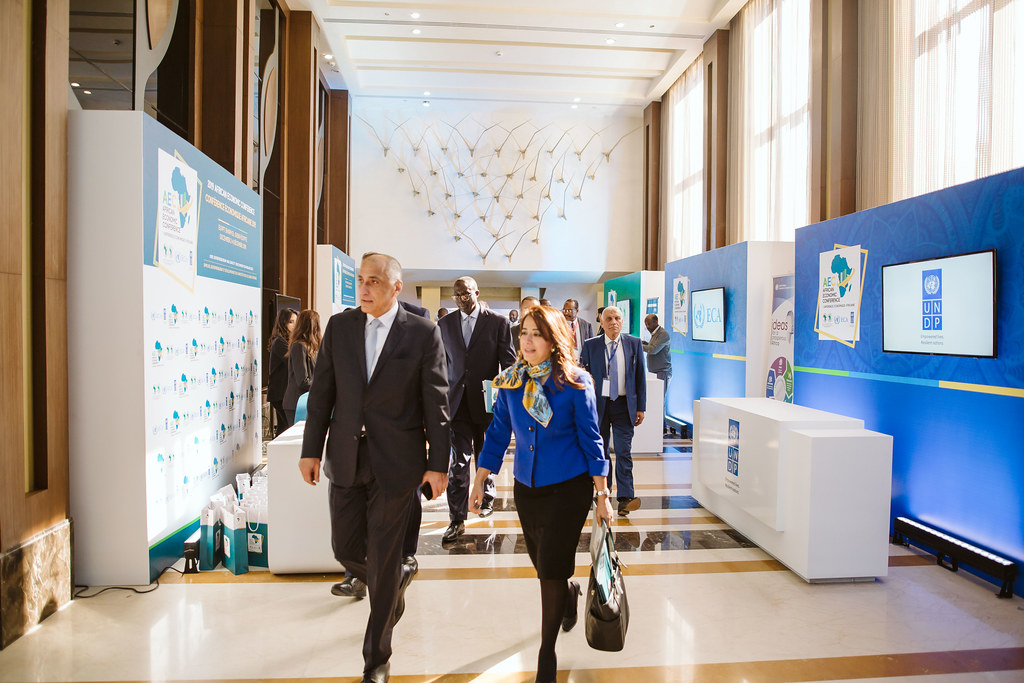
With this in mind, researchers, youth representatives, business leaders, and policymakers have joined over 350 stakeholders in Sharm El Sheikh, Egypt, to significantly move the needle on youth empowerment. 
The annual African Economic Conference (AEC), is jointly organized by the African Development Bank, the Economic Commission for Africa and the United Nations Development Programme, to discuss pertinent issues affecting the continent.
The 2019 AEC is held in Egypt and hosted by the Bank on the theme; “Jobs, entrepreneurship and capacity development for African youth” and runs from 2-4 December.
Turning the youth bulge into opportunities has been the focus of the African Development Bank’s game-changing approach to job creation, entrepreneurship, and capacity development. In recognition of the crucial role that entrepreneurship plays in the creation of high-quality jobs, the Bank developed its Jobs for Youth in Africa (JfYA) Strategy (2016-2025). The Strategy aims to create 25 million jobs for African youth over the next decade as well as equipping 50 million youth with a mix of hard and soft skills to increase their employability and their entrepreneurial success rate.
The impact is already being felt. Since its launch in 2016, over $20 billion has been invested by the Bank across 318 projects. These investments are directly making a difference in the African youth skills, entrepreneurship, business development, and job creation.
In parallel and working closely with its partners, the Bank is helping strengthen entrepreneurship ecosystems in Africa.  The flagship Youth Entrepreneurship and Innovation Multi-Donor Trust Fund (YEI MDTF) program provides interventions that equip the African youth, women-led start-ups, and micro, small, and medium enterprises (MSMEs) with skills and financial support to run bankable businesses.
The program also assists regional member countries (RMCs) in their implementation of economic and social reforms toward job creation.
In just one short year, the Trust Fund’s resources leapfrogged from USD4.4 million (in 2017) to almost USD40 million (in 2018). By providing technical assistance through enterprise support organizations and financial institutions, the Fund is anticipated to reach more than 480 youth-led startups in Ghana, Mali, Nigeria, Togo, and Zimbabwe.
The Bank has also been very active on the education front, supporting higher education institutions to deliver innovative training curricula that are adapted to the changing demand of the labor market and the private sector.  Academic incubators—also known as innovation centers of excellence, have been established.
One great example of success is the  African Institutions of Science and Technology (AIST) Program, whose mission is to deliver quality postgraduate education and build collaborative research capacity in various fields of Science, Engineering, Technology and Innovation (SETI). With funding from the Bank, a total of 1,477 PhD and MSc students have graduated, out of which 676 are women. Additionally, a total of 35 partnerships have been brokered with the private sector to enhance the quality and relevance of research.
Technical and Vocational Education and Training (TVET) has also been acknowledged by the Bank as one of the main drivers of human capital development alongside enhanced basic education that generates knowledge and skills more broadly. As such, the Bank’s TVET project in Tanzania, has bolstered TVET and teacher education with an investment amounting to $52 million. The expected outputs include expanded infrastructure of 13 institutions targeting about 8,000 trainees, expanded and extensive use of ICT in instruction at 53 institutions, and increased capacity for teaching, policy formulation, planning, and quality assurance.
The insights and thoughts provided by other African stakeholders, youth representatives, and political leaders on the debate on youth jobs, skills, and entrepreneurship capacities during the AEC 2019 are immensely important in helping the continent move forward.
Now, more than ever, we must listen to the voices of the African youth. 

* Dr. Hanan Morsy is Director, Macroeconomic Forecasting and Research at the African Development Bank Group

Tuesday, 3 December 2019

Bank Group President and colleagues bid farewell to outgoing Vice President Pierre Guislain

Bank Group President and colleagues bid farewell to outgoing Vice President Pierre Guislain

AfDB NEWS & EVENT
03-Dec-2019
The African Development Bank, on Thursday, bid farewell to retiring Vice-President for the Private Sector, Infrastructure and Industrialization, Pierre Guislain.
Hosted by Bank President Akinwumi Adesina​, and attended by senior management and Board members, VP Guislain was honoured for his outstanding leadership, pragmatism and humility during his tenure at the Bank.
President Adesina gave a heartfelt speech that evoked the several years shared with “a forthright, thoughtful and collegial leader with a heart for people” and highlighted VP Guislain’s many contributions to “delivering results, believing in his staff and building strong partnerships – setting a gold standard for his team and the Bank at-large.”
Senior Vice President Charles Boamah expressed his appreciation for VP Guislain’s commitment to the Bank, lauding VP Guislain for his consummate professionalism, collegiality and for always “bringing his rich experience and wisdom to bear in changing and diverse contexts.”
In response, VP Guislain conveyed his appreciation to his Bank colleagues. Reminiscing on his start in late 2016, he stated: “I was lucky to work with highly competent and driven colleagues who were willing to join me on a journey to accelerate and deepen the Bank’s support to the private sector and infrastructure development on the Continent.”
Between laughter, the spirit of the event was warm and amiable. Dean of the Board, Bright E. Okogu, also shared words of appreciation. “To have run the PIVP Complex the way you did in such a short period of time is commendable,” he said. “You were always calm and professional, expanding operations and ensuring success.”
Vice President Guislain retired from the African Development Bank on 29 November. A trained economist and lawyer, he came to the Bank with more than 30 years of experience in private sector and infrastructure development from the World Bank and International Finance Corporation (IFC).
VP Guislain plans to spend his time here in Abidjan with his family, exploring and relaxing in the region before setting off in March 2020.

African Development Bank launches digital tool to help African youth learn to code

African Development Bank launches digital tool to help African youth learn to code

AfDB NEWS & EVENT
03-Dec-2019
The African Development Bank and technology firm Microsoft today launched the ‘Coding for Employment’ digital training platform, an online tool to provide digital skills to African youth, wherever they are across the continent.
The platform, launched at the 2019 African Economic Conference in Sharm El Sheikh, Egypt, aims to promote a continuous learning culture among young people and build their capacity to shape the continent’s future.
The high-level event drew heads of state and government, ministers and leaders from the private sector and academia to discuss how this new tool and other technological innovations could be used to spur development across the continent.
“The youth employment and skills development challenge is a complex issue that requires systemic thinking and bold partnerships … to address the existing skills gap and link youth to decent and sustainable employment,” said Hendrina Doroba, the African Development Bank’s acting director for Human Capital, Youth & Skills Development.
“The skills training platform launched today is a testament to the impact that such partnerships can achieve and the Bank looks forward to strengthening similar partnerships.”
The  platform teaches technical courses such as web development, design, data science and digital marketing and will be constantly adapted to respond to market demand. It is accessible on mobile devices, even in low internet connectivity settings and has an affordable, easy-to-navigate, secured and private interface.
“A defining challenge of our time is ensuring that everyone has equal opportunity to benefit from technology,” Ghada Khalifa, Director of Microsoft Philanthropies for the Middle East and Africa, said at the launch.
“Forward-thinking initiatives such as the digital training platform represent our commitment to helping drive the momentum needed. Though there is still much work to be done, we believe that through dynamic partnerships such as these, we can help build a knowledge-based economy in Africa that leaves no person behind.”
The Coding for Employment Program is a crucial part of the African Development Bank’s strategic agenda to create 25 million jobs by 2025, and to equip 50 million African youth with competitive skills. The Bank piloted the program in five countries (Nigeria, Kenya, Rwanda, Senegal and Côte d’Ivoire) in partnership with The Rockefeller Foundation and Microsoft and is currently developing 14 ultra-modern centers specialized in ICT and entrepreneurship skills trainings for youth.
The goal is to scale up the program to 130 centers of excellence across the continent over a 10-year period. It will create nine million jobs by building synergies with the public and the private sector globally to deliver demand-driven, agile and collaborative skills to empower young people to become innovative players in the digital economy.
The Coding for Employment training platform can be accessed here across 54 African countries.

About the African Development Bank Group
The African Development Bank Group is Africa’s premier development finance institution. It comprises three distinct entities: the African Development Bank, the African Development Fund and the Nigeria Trust Fund. On the ground in 41 African countries with an external office in Japan, the African Development Bank contributes to the economic development and the social progress of its 54 regional member states. www.afdb.org

Monday, 2 December 2019

Government of Flanders grants 1 million euros to the Africa Climate Change Fund to support 5 projects in Malawi, Mozambique and South Africa

Government of Flanders grants 1 million euros to the Africa Climate Change Fund to support 5 projects in Malawi, Mozambique and South Africa

AfDB NEWS & EVENT
02-Dec-2019
The Government of Flanders this year has committed 1 million euros to the Africa Climate Change Fund (ACCF) to support five projects in three African countries - Malawi, Mozambique and South Africa.
In Malawi, the project will contribute to “demonstration of an innovative results-based finance model for adaptation to climate change”. It will be implemented by the Climate Change and Green Growth Department of the African Development Bank. 
In Mozambique, the grant will support two projects on “unlocking blended finance and youth/women entrepreneurs for resilient blue-green (or coastal) growth in Mozambique” and promoting “syntrophic agriculture as a strategy to foster resilience, climate adaptation and recovery of vulnerable communities living in degraded marine and costal ecosystems in Zambezia”. These projects will be implemented by the World Wide Fund for Nature and the Institute of International Economic Cooperation.
In South Africa, the projects seek to support ecosystem-based adaptation and financing for livestock farmers within South Africa’s threatened grassland as well as innovative access modality es for the Green Climate Fund; They will be executed by the Birdlife South Africa and South South North.
Simon Calcoen, Policy Officer at the Flanders Department of Foreign Affairs, said “the Government of Flanders looks forward to continue their cooperation on climate change adaptation in Africa”. The commitments were made in May 2019.
The new contribution follows an initial grant of two millions euros to the ACCF in November 2016 by the Flanders government, bringing the total contribution to the ACCF to 11.4 million euros, enabling its conversion to a multi-donor trust fund in early 2017. Since then, the ACCF has supported African countries in their process to transition towards climate resilient and low-carbon development through a portfolio of eight on-going projects.
It will enable the ACCF to extend its portfolio and geographic coverage and increase its benefits to the population across the African continent. The renewal of the Flanders’ contribution to the ACCF is an acknowledgment of the impact of ACCF’s work which contributes to achieving the African Development Bank’s goal to triple its climate financing to reach US$ 5 billion annually by 2020, as well as the objectives set out in the Bank’s Climate Change Action Plan (CCAP) 2016-2020 and in the 2013-2022 Strategy.
Moving forward, the ACCF aims to secure new funding contributions and scale up its climate finance support to enable African countries to achieve the ambitious objectives set out in their Nationally Determined Contributions.

Africa Climate Change Fund grants nearly $1 million to support access to climate finance in Benin and Lesotho

Africa Climate Change Fund grants nearly $1 million to support access to climate finance in Benin and Lesotho

AfDB NEWS & EVENT
02-Dec-2019
The Africa Climate Change Fund (ACCF) has approved a project proposal for a total of $997, 524 to support Benin and Lesotho to access international climate finance, an initiative underpinned by evidence that adaptation to climate change must start locally.
While local responses can create opportunities for innovative solutions, most local governments in least developed countries lack the institutional, technical and financial capacities to contribute to building resilience. Benin and Lesotho are two African countries which face such challenges and need more local-level investments to undertake measures to enhance water retention, promote more resilient farming and irrigation methods and climate-proof existing infrastructure such as water wells, bridges and rural roads.
The project proposal, approved in September, has been designed with the goal to improve the climate resilience of communities and local economies by increasing investments in climate change adaptation in target areas. Specifically, the project seeks to support (i) development of high quality, bankable projects aligned with African countries’ Nationally Determined Contributions (NDCs); (ii) identification and strengthening of national institutions and stakeholders to access the Green Climate Fund and lastly, (iii) small–scale or pilot adaptation initiatives targeting vulnerable communities. On completion, the project will increase local governments’ access to climate finance to implement climate change adaptation investments in Benin and Lesotho, through internationally recognized mechanisms. 
The project will be implemented by the United Nations Capital Development through its Local Climate Adaptive Living Facility (LoCAL) programme.
Naida Mohamed, ACCF Coordinator, said the approval was “an opportunity to expand the ACCF’s geographic reach and field of intervention and is in line with the Fund’s overall goal to address climate change challenges facing the African continent ”. 
The ACCF is an enabler fund which creates institutional capacity for recipient countries or institutions to access climate finance. This project aligns with the African Development Bank’s Strategy 2013-2022  and Climate Change Action Plan 2011-2015 and demonstrates how ACCF finance helps Regional Member Countries find financing  through domestic sources or externally towards enabling their transition to climate resilient, low-carbon development.

2019 African Economic Conference: A clarion call for bolder action to tackle Africa’s youth jobs crisis

2019 African Economic Conference: A clarion call for bolder action to tackle Africa’s youth jobs crisis

AfDB NEWS & EVENT
02-Dec-2019
The 2019 African Economic Conference (AEC) opened in the Egyptian resort city of Sharm El Sheikh on Monday with a call on African policymakers to take bold steps to tackle red-tape and high startup costs  in order to create decent and well-paying jobs for the continent’s youth.
Addressing the opening plenary of the three-day conference, Egypt’s Minister of Investment and International Cooperation, Sahar Nasr said the conference provided a critical platform to address the challenges of jobs for the youth on the continent.
“Africa is the next development frontier and the youths will be the main drivers of our continent and our hope for a new continent,” Nasr said. “We need to think strategically and plan for the youths of today.”
For the country’s Central Bank Governor, Tarek Amer, who is also Egypt’s Governor for the African Development Bank, “this is a matter that all policy makers across our continent are concerned about – we all have a vision to create jobs and boost entrepreneurship…and the issue is how to convert the vision into reality.”
Charles Leyeka Lufumpa, acting Chief Economist and Vice President of the African Development Bank Group, said a lack of jobs for the bulging youth population has become a troubling socio-economic and political emergency that requires urgent, pragmatic and forward-looking solutions.
“It is troubling because joblessness could result in unrest and conflict. Having a decent job is an essential part of human dignity, and joblessness could threaten our social fabric and cohesion.”
The Bank has several other initiatives that have contributed significantly to youth empowerment across Africa. Notable among them is its Jobs for Youth Strategy to create 25 million jobs by 2025 and to equip another 50 million young people with a mix of hard and soft skills to increase their employability and entrepreneurial success.
With a little more than a decade left to achieve the targets of the UN’s 2030 Agenda for Sustainable Development , the issue of youth productivity is critical for Africa, not least because the working age population is central to improving the continent’s productivity and competitiveness.
Adam Elhiraika, Director of Macroeconomics and Governance Division at the ECA, said to prepare young people for productive future work, governments should include in the educational curriculum action-oriented entrepreneurship modules for secondary, technical schools and universities.
Governments and development partners must help young entrepreneurs to identify financial help schemes, including grant schemes for innovative ideas with multiplier benefits, revolving and guarantee funds.
“Africa should work hard to make its cities engines of growth that in turn will generate employment for the youth and ensure there's equitable growth on the continent thus ensuring no-one is left behind as enunciated in the UN 2030 Agenda for Sustainable Development,” Elhiraika said.
One of the highlights of this year’s conference is a session for young African researchers to share their work and be the key proponents in shaping the future of the continent.
The AEC is jointly organized by the African Development Bank, the Economic Commission for Africa and the United Nations Development Programme yearly to discuss pertinent issues affecting the continent. This year’s event, the fourteenth edition, is hosted by the Bank on the theme; “Jobs, entrepreneurship and capacity development for African youth”.
AEC 2019 :Official opening ceremony

African Economic Conference 2019 – participants converge on Sharm El Sheikh to debate jobs, skills and capacity development for Africa’s youth

African Economic Conference 2019 – participants converge on Sharm El Sheikh to debate jobs, skills and capacity development for Africa’s youth

AfDB NEWS & EVENT
02-Dec-2019
More than 350 stakeholders are converging on Sharm El Sheikh, Egypt, to participate in the 2019 African Economic Conference (AEC), with this year’s focus on jobs, skills and capacity development for Africa’s youth.
The three-day conference, from 2-4 December, brings together researchers, youth representatives, business leaders, policymakers and media representatives from Africa and around the globe – to hammer out policies and strategies for successful inclusive growth and job creation in the region.
The recommendations will guide commitments of partners – the African Development Bank, the United Nations Development Programme (UNDP) and the United Nations Economic Commission for Africa (UNECA) – to investing in youth skills and entrepreneurial development for more inclusive African development.
Direct dialogue between African youths and stakeholders
What marks this 14th edition of the conference, will be direct dialogue between Africa’s youth and other stakeholders, including the private sector.  For this to happen, more than 40 young people have been invited to debate the issues relating to their own future and voice their own solutions to job creation.
“We need all stakeholders and in particular, we need solid linkages with the private sector, as drivers of innovation, providers of essential capital, job creators and employers,” a 24-year-old Sudanese participant said.
Employment is the cornerstone of economic and social development. The route out of poverty for Africa’s youth is through employment within the framework of well-tailored vocational training. Job creation is thus a generator of economic transformation and inclusive growth.
“It is no surprise that youth employment is one of the highest development priorities. A concerted effort of government policies as well as a stout involvement of the Private sector are required to spark such changes,” said the African Development Bank’s Acting Vice-President for Economic Governance and Knowledge Management and Chief Economist, Charles Lufumpa, who is leading the Bank’s delegation to the Conference.
The keynote address will be delivered by Professor Hilmar Schneider, Chief Executive Officer, the Institute of Labor Economics (IZA), Germany; Dr. Sahar Nasr, Egypt’s Minister of Investment and International Cooperation, makes the opening remarks.
Key Egypt government officials are attending the conference, including Tarek Amer, Governor of the Central Bank of Egypt and Governor of the African Development Bank for Egypt and Tarek Shawky, Minister of Education of Egypt. The Executive Director of the African Development Bank for Egypt, Ahmed Zayed, is also in attendance.
General Khaled Houda, Governor of South Sinaï Province, as well as General Mahmoud Souleya, Mayor of Sharm El Sheikh City, are also participating in the official opening ceremony.
Other prominent participants include: Tsongo Billy Eraston Kambale, Minister of Youth of the Democratic Republic of Congo; Sunday Akin Dare, Minister of Youth and Sports of the Federal Republic of Nigeria; Nadia Arop Dudi, Minister of Culture, Youth and Sports of the Republic of South Sudan; Mpendulo Dlamini, Deputy Minister of the Kingdom of Eswatini; Peter S. Bemah, Deputy Minister of Youth and Sports of the Republic of Liberia and Irène H. Andriamaneho, Representative of the Minister of Madagascar.
Dr. Raymond Gilpin, Chief Economist and Head of Strategy, Research and Analysis, is leading the UNDP delegation; while Adam Elhiraika, Director, Macroeconomics and Governance Division, represents the UNECA.
AEC 2019: Registration of participants