Monday, 13 April 2020

Appointment of Acting Director, Communication and External Relations

AfDB NEWS & EVENTSemail sharing button

06-Apr-2020
The African Development Bank Group is pleased to announce the appointment of Mrs. Nafissatou N’diaye DIOUF as the Acting Director for Communications and External Relations Department (PCER), effective 1st April 2020.
Nafissatou, a Senegalese national, is currently a Division Manager in the Communications and External Relations Department of the African Development Bank Group. A dedicated and results driven communications professional, Nafissatou brings over twenty (20) years of experience to the role, with a comprehensive background in corporate communications, public relations, journalism, digital and media Development.
Since her appointment as Division Manager in 2018, Nafissatou has fostered agile communication strategies, consistently reflecting cohesion with the Bank’s vision. She has built and led a world-class team of editors, writers, digital and media specialists, resulting in exponential increase in coverage and awareness around the Bank’s strategic objectives and projects.
Prior, Nafissatou had served as a communications consultant with the Bank’s Private Sector and Infrastructure Complex and Trade Department from 2016 to 2018, during which she engaged with Regional Integration and Trade Department Senior Management, streamlining communication and public relations strategies across a variety of platforms.
Before joining the Bank, Nafissatou, the founder and Managing Director of 54 Communications company,in Dakar, Senegal from 2011 to 2017 provided leadership for the cross-functional development and delivery of compelling public relations, branding, communication and event management strategies for a broad spectrum of public and private entities
Nafissatou also worked as Public Relations Director for Francophone Africa ZK Advertising,Johannesburg, South Africa during which she demonstrated a keen aptitude for cross-cultural leadership, managing teams of public relations professionals, account managers and country representatives across seven African countries, including Gabon, Niger, Chad, Madagascar, Burkina Faso, the Democratic Republic of Congo and the Republic of Congo. With a creative and collaborative approach to project management within challenging markets, Nafissatou excels in strategic storytelling, content development, capacity building and mentoring.
Prior to her transition into corporate communication, Nafissatou worked as a journalist with the Associated Press (AP), covering international conflicts and crises west and central Africa including Liberia, Côte d'Ivoire, the Democratic Republic of Congo, Niger, Mauritania, and the Central African Republic. Many of her breaking news stories were featured in global newspapers such as the Washington Post, USA Today, The Boston Globe and the LA Times. Nafissatou also worked as an Open-Source Officer for the Foreign Broadcast Information Service (FBIS), a division of the Central Intelligence Agency's Directorate of Science and Technology.
A native French speaker, Nafissatou holds a Master of Arts degree in Interpreting and Translation from Salford University in the United Kingdom (UK), a Bachelor of Arts (Hons) in Applied Language Studies from Thames Valley University and a Diploma in Journalism and Newswriting from the London School of Journalism.
Commenting on the appointment, Dr. Akinwumi Adesina, President of the African Development Bank said: “Nafissatou is a respected professional in the Communications and External Relations industry. I look to Nafissatou to steer the Department at this critical moment as the Bank responds to the rapidly changing situation of COVID-19 and to continue the excellent work done to date in the Department”.

Appointment of Acting Director, Corporate Information Technology Department (CHIS)

AfDB NEWS & EVENTS

06-Apr-2020
Senior Management is pleased to announce the appointment of Mr. Pepin Vougo as Acting Director, Corporate Information and Technology Department effective 1st April 2020.
Pepin Vougo has more than 20 years of experience in technology and its application. He is a seasoned executive with depth and breadth of experience in delivering complex technology solutions on an international scale. He benefits from both private sector and MDB experience.
Pepin has been with the African Development Bank for 7 years, first as Infrastructure and Telecommunications Manager and then as Business Solutions Development Manager in charge of the Bank’s Application Development portfolio. As well as delivering numerous successful online applications to help digitize the Bank, he led the development of the 2017-2021 Digital Strategy.
Prior to the African Development Bank, Pepin was Deputy Division Chief at the International Monetary Fund (IMF) where he was responsible for IT service delivery to over 100 offices around the world. He oversaw an IT budget of USD 12 million (capital) and USD 11m (operating) and managed a team of over 100 people. He launched important initiatives while at the IMF, delivering major cost-saving successes for the institution, as well as measured improvement in IT client experience and satisfaction.
Before joining the IMF, Pepin’s career was in leading private sector companies. He was a Vice-President of Engineering with JP Morgan Chase from 2006 to 2009, in charge of the Global Software & Configuration Management Group supporting over 5,000 developers worldwide. Pepin also led a major workforce reconfiguration exercise, to allow the company to respond to a rapidly changed economic context. Pepin started his career with Symantec, as an Application Integration Engineer. He left as IT Operations Manager for the Information Security and Compliance line of business, supporting over 2000 developers globally.
Pepin holds a Masters of Business Administration from St Thomas University in Houston, Texas and a Bachelor of Science in Electrical Engineering from the University of Houston.

Opinion: The pandemic is no time for fiscal distancing By Akinwumi Adesina, for CNN

AfDB NEWS & EVENTS

03-Apr-2020
Editor's Note: Akinwumi Adesina is the President of the African Development Bank. He was formerly Nigeria's Minister of Agriculture and Rural Development and and is the 2017 World Food Prize laureate. The views expressed are solely those of the author.
(CNN)These are very difficult days, as the world faces one of its worst challenges ever: the novel coronavirus pandemic. And it seems almost no nation is spared. As infection rates rise, so does panic across financial markets, as economies drastically slow down and supply chains are severely disrupted. 
Extraordinary times call for extraordinary measures. As such, it can no longer be business as usual. 
Each day, the situation evolves and requires constant reviews of precautionary measures and strategies. In the midst of all this, we must all worry about the ability of every nation to respond to this crisis. And we must ensure that developing nations are prepared to navigate these uncharted waters fully. 
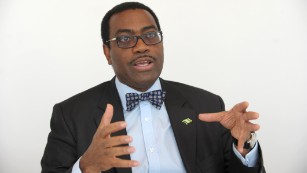
    Akinwumi Adesina
    That's why I support the UN Secretary-General Antonio Guterres' urgent call for special resources for the world's developing countries. 
    In the face of this pandemic, we must put lives above resources and health above debt. Why? Because developing economies are the most vulnerable at this time. Our remedies must go beyond simply lending more. We must go the extra mile and provide countries with much-needed and urgent financial relief -- and that includes developing countries under sanctions. 
    According to the independent, global think tank ODI in its report on the impact of economic sanctions, for decades, sanctions have decimated investments in public health care systems in quite a number of countries.
    Today, the already stretched systems as noted in the 2019 Global Health Security Index will find it difficult to face up to a clear and present danger that now threatens our collective existence.
    Only those that are alive can pay back debts.  
    Sanctions work against economies but not against the virus. If countries that are under sanctions are unable to respond and provide critical care for their citizens or protect them, then the virus will soon "sanction" the world.
    In my Yoruba language, there is a saying. "Be careful when you throw stones in the open market. It may hit a member of your family."  
    That's why I also strongly support the call by the UN Secretary-General that debts of low-income countries be suspended in these fast-moving and uncertain times. 
    But I call for even bolder actions, and there are several reasons for doing so. 
    First, the economies of developing countries, despite years of great progress, remain extremely fragile and ill equipped to deal with this pandemic. They are more likely to be buried with the heavy fiscal pressure they now face with the coronavirus. 
    Second, many of the countries in Africa depend on commodities for export earnings. The collapse of oil prices has thrown African economies into distress. According the AFDB's 2020 Africa Economic Outlook, they simply are not able to meet budgets as planned under pre-coronavirus oil price benchmarks.
    The impact has been immediate in the oil and gas sector, as noted in a recent CNN news analysis.
    In the current environment, we can anticipate an acute shortage of buyers who, for understandable reasons, will reallocate resources to addressing the Covid-19 pandemic. African countries that depend on tourism receipts as a key source of revenue are also in a straightjacket. 
    Third, while rich countries have resources to spare, evidenced by trillions of dollars in fiscal stimulus, developing countries are hampered with bare-bones resources. 
    The fact is, if we do not collectively defeat the coronavirus in Africa, we will not defeat it anywhere else in the world. This is an existential challenge that requires all hands to be on deck. Today, more than ever, we must be our brothers and sisters' keepers.  
    Around the world, countries at more advanced stages in the outbreak are announcing liquidity relief, debt restructuring, forbearance on loan repayments, relaxation of standard regulations and initiatives.
    In the United States, packages of more than $2 trillion have already been announced, in addition to a reduction in Federal Reserve lending rates and liquidity support to keep markets operating. In Europe, the larger economies have announced stimulus measures in excess of 1 trillion Euros. Additionally, even larger packages are expected. 
    As developed countries put in place programs to compensate workers for lost wages for staying at home for social distancing, another problem has emerged -- fiscal distancing.
    Think for a moment what this means for Africa. 
    The African Development Bank estimates that Covid-19 could cost Africa a GDP loss between $22.1 billion, in the base case scenario, and $88.3 billion in the worst case scenario. This is equivalent to a projected GDP growth contraction of between 0.7 and 2.8 percentage points in 2020. It is even likely that Africa might fall into recession this year if the current situation persists.
    The Covid-19 shock will further squeeze fiscal space in the continent as deficits are estimated to widen by 3.5 to 4.9 percentage points, increasing Africa's financing gap by an additional $110 to $154 billion in 2020. 
    Our estimates indicate that Africa's total public debt could increase, under the base case scenario, from $1.86 trillion at the end of 2019 to over $2 trillion in 2020, compared to $1.9 trillion projected in a 'no pandemic' scenario. According to a March 2020 Bank report, these figures could reach $2.1 trillion in 2020 under the worst case scenario.
    This, therefore, is a time for bold actions. We should temporarily defer the debt owed to multilateral development banks and international financial institutions. This can be done by re-profiling loans to create fiscal space for countries to deal with this crisis.  
    That means that loan principals due to international financial institutions in 2020 could be deferred. I am calling for temporary forbearance, not forgiveness. What's good for bilateral and commercial debt must be good for multilateral debt.
    That way, we will avoid moral hazards, and rating agencies will be less inclined to penalize any institution on the potential risk to their Preferred Creditor Status.  The focus of the world should now be on helping everyone, as a risk to one is a risk to all.
    There is no coronavirus for developed countries and a coronavirus for developing and debt-stressed countries. We are all in this together.  
    Multilateral and bilateral financial institutions must work together with commercial creditors in Africa, especially to defer loan payments and give Africa the fiscal space it needs.
    We stand ready to support Africa in the short term and for the long haul. We are ready to deploy up to $50 billion over five years in projects to help with adjustment costs that Africa will face as it deals with the knock-on effects of Covid-19, long after the current storm subsides. 
    But more support will be needed. Let's lift all sanctions, for now. Even in wartime, ceasefires are called for humanitarian reasons. In such situations, there is a time to pause for relief materials to reach affected populations. The novel coronavirus is a war against all of us. All lives matter.
      For this reason, we must avoid fiscal distancing at this time. A stitch in time will save nine.  
      Social distancing is imperative now. Fiscal distancing is not. 

      African Development Bank celebrates milestone with first social bond listing on London Stock Exchange

      AfDB NEWS & EVENTS

      Record-breaking $3 billion Fight Covid-19 social bond launches on LSE: a first for the Bank
      03-Apr-2020
      The African Development Bank’s “Fight Covid-19” social bond, the largest social bond to date to be issued in the capital markets, listed on London Stock Exchange on Friday 3 April 2020, and is now available through its Sustainable Bond Market.
      The listing marks an important milestone as the Bank launches its first bond on London Stock Exchange.
      The over-subscribed transaction, which attracted $4.6 billion of interest in the book and raised an exceptional $3 billion, was launched to alleviate the impact of Covid-19 on Africa’s economies and livelihoods.
      The three-year maturity bond, garnered interest from central banks and official institutions, bank treasuries and asset managers including Environment, Social and Governance (ESG) investors.
      Several high-quality ESG investors actively supported this remarkable transaction, including Affirmative Investment Management (UK), Breckinridge, Columbia Threadneedle (USA), the Government Pension Investment Fund, the International Fund for Agricultural Development, Pension Boards – United Church of Christ, PineBridge Investments, Praxis Impact Bond Fund, TIAA/Nuveen and the United Nations Development Program.
      “The international community must work together to successfully tackle the coronavirus pandemic. The UK, along with partners like the African Development Bank and London Stock Exchange Group, is supporting the most vulnerable countries to invest in their own health systems and avoid economic hardship,” International Development Secretary Anne-Marie Trevelyan said about the listing.
      “While we invest in areas like vaccine research to help end the pandemic sooner, this private investment through the AfDB, and our support for emergency lending through the IMF, will also help limit its impact on the global economy,” Trevelyan further noted.
      The London Stock Exchange, at the heart of London’s vibrant financial hub, is championing forward-looking initiatives aimed at deepening and diversifying the market. Its dedicated Sustainable Bond Market (SBM) draws innovative issuers and improves access, flexibility and transparency for investors.
      Eligible social or sustainability bonds with use of proceeds aligned to mitigating the impact of Covid-19 will be admitted on the exchange with admission fees waived for an initial period of three-months, London Stock Exchange has announced.
      Such social and sustainability bonds fund essential services such as healthcare, water and sanitation, supporting employment, or with a link to the relevant UN Sustainable Development Goals.
      Nikhil Rathi, CEO, London Stock Exchange plc and Group Director of International Development, said: “We welcome the first bond from African Development Bank to list on our market and support them in their vital efforts to mitigate the impact of Covid-19 across Africa. This bond highlights the important role that social and sustainability bonds can play in directing funding to those countries, sectors and people across the world heavily impacted by this pandemic.”
      The Bank established its Social Bond framework in 2017 and raised the equivalent of $5 billion through issuances denominated in US dollars, Euro and Norwegian krone.
      The President of the African Development Bank, Akinwumi Adesina, said: “We are proud to announce that our first listing on London Stock Exchange is a social bond. This is only the beginning of a stronger partnership between the African Development Bank and London Stock Exchange. We will mobilize all we can on the capital market to fight the coronavirus in Africa.”
      The Bank’s previous activity in the social bond market has seen financing to build hospital capacity, boost access to health and healthcare services, strengthen health systems, provide improved access to water and sanitation, and create jobs across the continent.
      Commenting on the listing, Martin Scheck, CEO of The International Capital Market Association or ICMA, said: “We believe Social and Sustainability Bonds can provide an immediately actionable channel for the market to finance projects that directly contribute to alleviating the social and economic impact of the Covid-19 crisis.”
      Swazi Tshabalala, Acting Senior Vice President, African Development Bank Group, said: “The African Development Bank is at the forefront of helping African countries fight this pandemic with innovative financing solutions. We welcome this partnership with London Stock Exchange which will help us expand the horizon of investors that are interested and committed to Africa’s sustainable development.”
      Hassatou N’Sele, Treasurer, African Development Bank Group, said: “We appreciate the partnership with London Stock Exchange as we strive together to move the African continent forward. Today more than ever, Africa and the world need to stand as one to ride out the Covid-19 crisis.”

      African Development Bank Group approves Gender Equality Trust Fund and Risk-Sharing Mechanism to improve women’s economic empowerment in Africa

      AfDB NEWS & EVENTS

      03-Apr-2020
      The Board of Directors of the African Development Bank Group have approved a new Gender Equality Trust Fund (GETF) aimed at pushing forward gender equality and women’s empowerment across the continent.
      Funded by donors, the GETF will support the delivery and scale-up of the Bank’s Affirmative Finance Action for Women in Africa (AFAWA) programme and promote gender transformative lending and non-lending operations. It is the first thematic fund on gender in the Bank Group’s history. The Fund will be established for an initial period of 10 years.
      AFAWA is the Bank’s flagship pan-African initiative which aims to bridge the $42 billion financing gap facing women in Africa. Through AFAWA, the Bank is spearheading a major push to unlock women’s entrepreneurial capacity and economic participation for maximum development impact.
      Also on Tuesday 31 March, the Board of Directors of the Bank approved a Risk-Sharing Mechanism – an innovative financial instrument to de-risk women-empowered businesses, enhance their profile with banks and support them to grow and thrive as entrepreneurs.
      Anchor investors in the GETF are the governments of France, the Netherlands and the United Kingdom.
      “It’s a great day for us as a Bank. It is a great day for the continent and the women of Africa as this facility provides innovative ways to tackle the access to finance challenges for African women business owners,” said African Development Bank President Akinwumi Adesina.
      The African Guarantee Fund (AGF) has been chosen as the first implementing partner to facilitate access to finance for women-owned small and medium-sized enterprises (SMEs). AGF is a pan-African entity that provides financial institutions with guarantees and other financial products to support SMEs in Africa. AGF has a network spread out over 42 African countries and 150-plus financial institutions, which AFAWA will leverage. This first transaction is expected to unlock up to $2 billion in credit for women-empowered businesses across the continent.
      Vanessa Moungar, Bank Director, Gender, Women and Civil Society, described the approval as “the largest effort ever to bridge the gap in access to finance for women in Africa’s history” and said the Fund’s resources and the Risk-Sharing Mechanism would prioritize women’s economic empowerment and high-impact women’s initiatives.
      Moungar said the partnership with AGF is a starting point for mobilizing other financial institutions and increasing access to finance for women entrepreneurs on the continent.Apart from the G7 donors and the Netherlands, other countries are showing strong interest in contributing to the initiative, including Rwanda and Sweden. The Bank Group will continue to mobilize resources in order to unlock $5 billion worth of financing for women-empowered businesses in Africa. AFAWA is also an implementing partner of the Women Entrepreneurship Finance (We-Fi) Initiative.

      African Development Bank approves $1.5 million emergency grant to curb desert locusts ravaging East and Horn of Africa

      AfDB NEWS & EVENTS

      02-Apr-2020
      The Board of Directors of the African Development Bank on Wednesday approved a $1.5 million emergency relief grant to assist nine countries in the East and Horn of Africa on the control of swarms of desert locusts that are threatening livelihoods and food security.
      The proposed assistance will be channeled to the Intergovernmental Authority on Development (IGAD), which has been mandated to mobilize resources on behalf of the African Union.
      IGAD is collaborating with the UN’s Food and Agriculture Organization (FAO), which is leading coordination of development partner support to provide desert locust invasion control, safeguard of livelihoods and to promote early recovery of affected households in the East and Horn of Africa. FAO will act as the Executing Agency for the grant.
      The funds will be used to control the spread of the current locust invasion, prevent potential next-generation swarms and to conduct impact assessment and monitoring to enhance preparedness and awareness. A portion of the funds would also be allocated to administrative costs.
      The nine beneficiary countries are Djibouti, Eritrea, Ethiopia, Kenya, Somalia, South Sudan, Sudan, Uganda and Tanzania.
      Kenya, Ethiopia and Somalia have been particularly hard hit by the outbreak and widespread breeding of locusts that is expected to create new swarms in the coming weeks. The infestation poses an unprecedented risk to livelihoods and food security in an already fragile region and has caused huge damage to agricultural production.
      In Ethiopia and Somalia, the outbreak is the worst in 25 years, and in Kenya, in 70 years.
      In Ethiopia, the locusts have devastated more than 30,000 hectares of crops, including coffee and tea, which account for about 30% of the nation’s exports. Despite government interventions, swarms and breeding have been reported in large parts of the country. In Djibouti, over 80% of 1,700 agro-pastoral farms located in 23 production zones are affected by desert locust infestations.
      At least 18 of 47 Kenyan counties are affected, with more than 70,000 hectares of crops under infestation according to recent FAO reports. Locust swarms are devastating pastureland, maize, cowpeas, beans and other crops despite the government’s efforts to curb the outbreak.
      Locust swarms are reportedly also threatening Uganda, Tanzania, South Sudan, Sudan and Eritrea.
      Efforts to control the infestations will require around $147 million, of which $75 million has been provided by governments, donors and UN agencies including FAO and the World Food Program (WFP). However, a significant funding shortfall remains.

      African Development Bank wins industry gong for pioneering 2019 social bond issue

      AfDB NEWS & EVENTS

      01-Apr-2020
      The African Development Bank received on 30 March 2020 an award for its successful one billion Norwegian krone (NOK) social bond issued in 2019. This Environmental Finance 2020 bond award was given by an independent panel comprising 30 of the world’s largest green, social and sustainability bond investors.
      "It is inspiring to observe how the African Development Bank sources global capital to finance, lead and develop a strong platform for inclusive and environmental growth across Africa. We know from many of our investors that the ability to participate in Africa through AfDB's triple-A rating is highly appreciated and we look forward to many more transactions like this," said Christopher Flensborg, Head of Climate & Sustainable Finance in Large Corporates & Financial Institutions at Skandinaviska Enskilda Banken, a Swedish financial group.  
      The African Development Bank bond issue was the first social bond ever launched in the Norwegian market, and the Bank’s first transaction in NOK. It was launched in April 2019, as part of a dual-tranche social bond and green bond, placed on the Norwegian and Swedish markets. The dual transaction drew strong interest from dedicated socially responsible investor portfolios as well as those who strongly weight environmental, social and governance considerations in their investment strategies. 
      The proceeds from this social bond issuance are being directed toward poverty reduction, job creation, and inclusive growth. Since 2017, the Bank has launched nearly $5 billion worth of such instruments denominated in US dollars, euros and Norwegian krone. In 2018, the Bank was recognized as “Second most impressive social or sustainability bond issuer” at the Global Capital Socially Responsible Investments Awards.
       The Environmental Finance 2020 bond award followed the 27 March announcement that the Bank had raised a record $3 billion from its Fight COVID-19 social bond, the proceeds of which will fund public and private efforts to tackle the viral pandemic in Africa. Fight COVID-19 is the largest social bond ever issued in capital markets.
      “We are honored to receive this recognition for this first ever issued social bond in the Norwegian market. This NOK issue reinforces the Bank’s High 5 operational focus which is aligned with the Sustainable Development Goals. Our Social bond framework allows us to attract investors whose interests are aligned with those of our development mandate,” said Bajabulile Tshabalala, acting Senior Vice President of the African Development Bank.
      “We are delighted to be honored by market leaders as we devote our efforts towards the economic and social development of the African continent. The mission of the African Development Bank is to combat poverty and improve lives and social bonds allow us to showcase the impact of our social projects in Africa,” said Hassatou Diop N’Sele, Treasurer of the African Development Bank Group.
      The Bank is rated AAA by all four major credit rating agencies, with a stable outlook.