Wednesday, 20 June 2018

Move against domestic violence, Ambode’s wife charges women


By Temitope Musowo
Wife of the governor of Lagos State, Bolanle Ambode, has urged women in the state, to pay due attention to their health and speak out against social vices like domestic violence, child abuse, rape and teenage pregnancy.

She gave the charge at a women’s forum organised by her, at the Police College, GRA, Ikeja, to address issues of women’s health and recurring social vices in the society.


Mrs Ambode noted that good health was a prerequisite for every other thing, including good attention to children and family, business and even political activities, stressing that without good health, nothing meaningful could be achieved.

According to her, "health is wealth’ they say, because good health is the gate way to everything. To have good health, we need to take care of our body, mind and soul.


"It is when we have good health that we can run around for business, take care of our homes, our children or engage in political activities. When we have sound health, we can better attend to all issues and concerns." 

The governor’s wife who condemned the high rate of prevalence of social nuisance in the society, told the women to boldly voice out their discontent against domestic violence, child abuse, rape and teenage pregnancy.


She described the attitude as barbaric and unacceptable in civilized climes, charging women to seek to know their rights under the law, to shun silence and be vocal voices for their own cause.

Mrs Ambode said: "Importantly too, we would be examining the rights of women under the law, in the face of persistent social problems. When we know our rights, we can speak better and act better, to protect ourselves if and when those circumstances arise." 


She reminded the women of their natural role as mothers and coordinators of the family unit, which according to her, imposed on them the salient responsibility of bringing up their children in the most decent way for a decent and moral society.

Speaking at the event, Deputy Governor of Lagos State, Dr.  Oluranti Adebule, said the forum provided a platform where women could engage in sustainable discourse, to increase their knowledge and enhance their awareness, on health and well-being as participants.

Adebule said it was unfortunate that 23 years after countries signed pledges in 1995 Beijing Declaration and Platform of  Action, women still faced many health-cum-social problems, saying that there was need for recommitment to address them. 

She urged Lagos women to embrace sustainable advocacy and take conscious action on matters concerning their health and how they were treated by the society at large.

"We should no longer be stereotyped into silence but become vocal advocates for improved health delivery system and social justice for women in Lagos State and the country.

"As critical stakeholders, our role must be focused on investing and increasing access of more girls and women to good health, quality education; ensuring that laws that respect and ensure the rights of women are enforced and help create gender-posture media messages that support women and girls in distress," she said.

Adebule, however, appealled to all women to join hands with the government in the battle against dogmas inimical to healthy lifestyle, social malaise of domestic violence, child abuse, rape and teenage pregnancy.

Speaking on the topic: "Be the Voice against Child Abuse and Teenage Pregnancy, "Mrs Modupeola Adebambo of the Ministry of Youth and Social Development, submitted that children who were sexually abused, tended to be sexually active thus exposed to teenage pregnancy, sexually transmitted diseases and alcoholic addiction, among others.

She appealed to parents not to abuse their children in whatever form, adding that parents should teach their children sex education to make them aware of the danger inherent in sexual abuse.

Director, Office of Public Defender, OPD,  Olayinka Adeyemi, who spoke on domestic violence and rape, urged women to speak out against domestic violence and report such cases to the OPD for immediate legal action.

While the duo of Mrs. Rashidat Hassan and Mrs. Akintunde Ibironke of the Ministry of Health, advised the women to go for regular checks, for early detection of ailments.

The programme came in two sessions, with the first session dedicated to general health screening, cancer screening and distribution of 500 free eye glasses while the second session was devoted to health talks and topics on issues of social vices.

All dignitaries at the event took a stand against domestic violence, child abuse, rape and teenage pregnancy, and encouraged healthy living.

The programme saw over 3000 women in attendance.

Thursday, 14 June 2018

Women Empowerment: Ondo First Lady Seeks African Development Bank's Collaboration

By Temitope Musowo
In her deep sense of commitment to women affairs and development, Wife of Ondo State Governor has called for African Development Bank's (AfDB) collaboration in the area of women empowerment and social development in the State.
Mrs Akeredolu made this call during a technical session with the visiting AfDB group management team led by its Senior Director Mr Ebirima Faal at the Ondo State Executive Council Chamber, Akure.
Mrs Akeredolu welcomed AfDB group to Ondo State and wished them a happy stay during the period of their stay in Ondo State.
The Sunshine State First Lady recounted some of the Landmark Achievements of the office of the Wife of the Governor within one year in office to include;
ICT training for 105 girls from across Ondo State, where all the participants went home with a tablet.
Solar Renewable Energy training for over 200 Ondo State girls and beyond,
Skill Acquisition training for over 1000 women in 5 LGA's in her FOWOSO women empowerment program, where a hundred women and girls smiled home with a laptop.
Others include:
Accelerated birth registration
Massive Breast Cancer Awareness in Nigeria etc.

Mrs Akeredolu stressed that all these achievements were accomplished in the midst of huge debt inherited by their Administration on assumption of office and called for AfDB's collaboration towards giving Ondo women and children the much desired dividends of democracy in the area of qualitative Health Care delivery, Maternal and child mortality reduction, Poverty alleviation, Gender parity etc.
Contributing the Senior Director of the AfDB Nigeria Country Office, Mr Ebirima Faal commended Mrs Akeredolu for what he described as a "passionate work" she is doing in Ondo State, stressing that it is in line with what the bank is committed to.
Mr Faal further pledge the support of AfDB to the programs of the office of the Wife of the Governor.
In her remarks, one of the management team members of AfDB Linda Amadi, commended the First Lady in her community oriented programs and projects which she said grantees sustainability and acknowledged that it is also part of the banks interest and what the are concerned with.
She further revealed that the bank has a job for youths in Africa initiative which is hoped to generate 25million jobs for African youths in the next 10years.
She assured Mrs Akeredolu of women inclusion and that the bank is keen in incorporating gender in all its activities and programs.

Wednesday, 13 June 2018

POLLUTION: N.G.O CANVASSES TOTAL BAN ON PLASTIC USE


Dapo Thomas

A Lagos based Non Governmental Organisation (NGO) with focus on the 17 Sustainable Development Goals (SDGs),Blossom Africa Initiative is canvassing for a total ban on plastic use in Lagos as a solution to plastic pollution and its effect on the environment. 

Blossom Africa Initiative which in line with the theme of this  year's World Environment Day, "Beat Plastic Pollution", today took  the campaign to reduce plastic waste to shopping malls in Lagos.The organisation in their branded T-shirt stormed Ikeja shopping mall, educating consumers about the need to reduce plastic waste which they said is harming our environment, distributing flyers to shoppers.

The  NGO which last week joined the Lagos State Environmental Protection Agency (LASEPA), to celebrate the world environment day. said it is all out to create  awareness about the United Nations 17 Sustainable Development Goals (SDGs) and the role everyone has to play in the actualization. 


Speaking with journalists after the exercise, the President of the Organisation,Mr Temitope Musowo said the exercise was important to send signal to stakeholders that campaign about protection of our environment should not be a once- in- a -year affair. 

"Every year, we come together to celebrate World Environment Day and after the usual noise about protection the environment  it all ends there,we go back to business as usual,people still continue polluting our environment, this should not be a one off campaign,it should be a continuous exercise  until people get the message.

Do you you know how much harm plastic pollution is doing to our environment and marine life, if I have my way I will push for outright ban of plastic use in Lagos in particular ,especially  single use plastic,and this is why I said that,for instance, Lagos generate 16,000 metric tones of waste on daily basis,which means Lagos generate 1600 metric tones of plastic waste daily because findingings have shown that 10% of waste we generate is plastic",he said.

Mr Musowo further condemned what he described as single-use plastic which he said form 50% of the plastic we use,saying it takes an average of 500 years for plastic to decompose while we use our plastic bags for just an average of 12 minutes.

According to the President, one of the reasons we experience perennial flooding in Lagos is because of metric tones of plastic waste that find their ways into  the sewage system and providing breathing space for Mosquitoes, raising the risk of malaria transmission. 

" Do you know that every year, the world use 500 billion plastic bags,about 13 million tones of plastic leak into the ocean,do you know every year ,17 million barrels of oil is used to produce plastic bottle for our water and if we continue like this by year 2050,there will be more plastic than fish in the world's ocean ",he maintained. 

He called on everyoneto be part of the solution to plastic pollution by refusing what they cannot reuse, switching from single-use plastic to biodegradable products and improve waste collection through sorting,recycling and reprocessing while making environmental friendly choices.

Speaking further about the vision of the organisation, the President said,"we observed that one of the reasons no African country was able achieve the Millennium Development Goals (MDGs) was because of the low level of awareness among the populace,now we have another opportunity with the SDGs again,if you sample the opinion of people on the street you will discover many people are not even aware meanwhile, we all have a role to play the fulfilment. 

This need to champion this awareness campaign and advocacy gave birth to Blossom Africa Initiative,as you can see this is just one of our campaign as it has to do with Goal 7,13,14 and 15 ,talking about our environment now,subsequently, we are taking the SDGs campaign to schools to get the children involved for sustainable sake",he reiterated 

Tuesday, 22 May 2018

CDC TO RESPOND TO EBOLA OUTBREAK IN DEMOCRATIC REPUBLIC OF CONGO


Africa Centres for Disease Control and Prevention to deploy epidemiologists, laboratory experts, and anthropologist to respond to the Ebola outbreak in Democratc Republic of Congo

Urges long-term action to build resilient health systems locally and national public health systems to pick up events rapidly

Kinshasa/ Bandaka/Bikoro, 20 May 2018 - The Africa Centres for Disease Control and Prevention (Africa CDC) is deploying 25 epidemiologists, laboratory experts, and anthropologists to support the government of the Democratic Republic of Congo’s (DRC)  efforts to control the recent Ebola virus outbreat in Mbandaka and Bikoro. Following the announcement on 8 May 2018 of the Ebola outbreak by the government of DRC, the Africa CDC deployed an assessment mission within 48 hours and activated its Emergency Operational Centre to link, scan and monitor the situation.

“The global community needs to respond to this outbreak as a crisis and not as an emergency, by quickly deploying public health assets to the affected areas expiditiously”. I want to applaud the Minister of Health of the DRC for his exemplary leadership in managing this current outbreak so far. “All our efforts should be geared towards supporting his leadrship” said Dr. John Nkengasong, the Director of the Africa CDC, upon his return this week, with a high level delegation, to the affected areas in Mbandaka and Bikoro.
The DRC government is working with partners to improve coordination mechanisms, enhance surveillance, laboratory confirmation, contact identification and follow-up, case management, infection prevention and control, safe and dignified burials, social mobilisation and community engagement, logistics, risk communication, vaccination, partner engagement, research and resource mobilisation.


During the Africa CDC team’s visits they assisted the Ministry of Health, together with other partners,  to develop three strategies: a) surveillance and contact tracing, b) Defining the various health areas affected, and c) laboratory testing and network. The Africa CDC will provide up to USD 2 million to support Africa CDC interventions. Due to the remote nature of the Equateur Province, it is expected that more efforts will need to be put in supply chain issues to ensure that essential items needed are delivered swiftly. Last week the African Union Peace and Security Council was briefed on the situation and will continue to receive reports.  Under Article 6(f) relating to its mandate with regard to humanitarian action and disaster management the Council can authorise deployment of military and civilian missions and assets to tackle emergency situations as it did in August 2014 in the Ebola outbreak in the West Africa sub-region. This outbreak is the 9th outbreak of the Ebola virus disease over the last 4 decades in the country. The affected health area of Bikoro covers 1 075 km and has a population of 163 065 inhabitants. This huge population is supported by only 3 hospitals and 19 health centres, most of which have limited functionality. 

The risk of speard of the virus is high at national and regional levels due in part to the proximity of the epidemic focus to the Congo River which links with the capitals of the Republic of Congo and the Democratic Republic of Congo and the Central African Republic. As such, Africa CDC is coordinating with these countries to ensure that their surveillance systems are activated and information is shared in real time.

About the Africa CDC
The Africa CDC supports all African countries to improve surveillance, emergency response, and prevention of infectious diseases. This includes addressing outbreaks, man-made and natural disasters, and public health events of regional and international concern. It further seeks to build the capacity to reduce disease burden on the continent.
For further information contact

Mr. Tawanda Chisango I AIDS Watch Africa (AWA) Program Advocacy & Partnership Expert | Social Affairs | African Union Commission I E-mail: chisangot@africa-union.org  | Web www.au.int Iwww.aidswatchafrica.net 
Addis Ababa | Ethiopia


Urges long-term action to build resilient health systems locally and national public health systems to pick up events rapidly

Kinshasa/ Bandaka/Bikoro, 20 May 2018 - The Africa Centres for Disease Control and Prevention (Africa CDC) is deploying 25 epidemiologists, laboratory experts, and anthropologists to support the government of the Democratic Republic of Congo’s (DRC)  efforts to control the recent Ebola virus outbreak in Mbandaka and Bikoro. Following the announcement on 8 May 2018 of the Ebola outbreak by the government of DRC, the Africa CDC deployed an assessment mission within 48 hours and activated its Emergency Operational Centre to link, scan and monitor the situation.

“The global community needs to respond to this outbreak as a crisis and not as an emergency, by quickly deploying public health assets to the affected areas expeditiously”. I want to applaud the Minister of Health of the DRC for his exemplary leadership in managing this current outbreak so far. “All our efforts should be geared towards supporting his leadership” said Dr. John Nkengasong, the Director of the Africa CDC, upon his return this week, with a high level delegation, to the affected areas in Mbandaka and Bikoro.

The DRC government is working with partners to improve coordination mechanisms, enhance surveillance, laboratory confirmation, contact identification and follow-up, case management, infection prevention and control, safe and dignified burials, social mobilisation and community engagement, logistics, risk communication, vaccination, partner engagement, research and resource mobilisation.

During the Africa CDC team’s visits they assisted the Ministry of Health, together with other partners,  to develop three strategies: a) surveillance and contact tracing, b) Defining the various health areas affected, and c) laboratory testing and network. The Africa CDC will provide up to USD 2 million to support Africa CDC interventions. Due to the remote nature of the Equateur Province, it is expected that more efforts will need to be put in supply chain issues to ensure that essential items needed are delivered swiftly. Last week the African Union Peace and Security Council was briefed on the situation and will continue to receive reports.  Under Article 6(f) relating to its mandate with regard to humanitarian action and disaster management the Council can authorise deployment of military and civilian missions and assets to tackle emergency situations as it did in August 2014 in the Ebola outbreak in the West Africa sub-region. This outbreak is the 9th outbreak of the Ebola virus disease over the last 4 decades in the country. The affected health area of Bikoro covers 1 075 km and has a population of 163 065 inhabitants. This huge population is supported by only 3 hospitals and 19 health centres, most of which have limited functionality. 

The risk of spread of the virus is high at national and regional levels due in part to the proximity of the epidemic focus to the Congo River which links with the capitals of the Republic of Congo and the Democratic Republic of Congo and the Central African Republic. As such, Africa CDC is coordinating with these countries to ensure that their surveillance systems are activated and information is shared in real time.

About the Africa CDC
The Africa CDC supports all African countries to improve surveillance, emergency response, and prevention of infectious diseases. This includes addressing outbreaks, man-made and natural disasters, and public health events of regional and international concern. It further seeks to build the capacity to reduce disease burden on the continent.
For further information contact

Mr. Tawanda Chisango I AIDS Watch Africa (AWA) Program Advocacy & Partnership Expert | Social Affairs | African Union Commission I E-mail: chisangot@africa-union.org  | Web www.au.int Iwww.aidswatchafrica.net 
Addis Ababa | Ethiopia


You are receiving this message because you are a member of the community Journalists working on health.
View this contribution on the web site
A reply to this message will be sent to all members of Journalists working on health.
Reply to sender | Unsubscribe

Friday, 18 May 2018

CLIMATE CHANGE: EXPERTS GIVE URGENT ACTION A PANACEA FOR AFRICAN'S RESILIENCE AND ADAPTATION

By Temitope Musowo 

It was a beehive of activities at the International Conference Centre of the Unvèrsity of Ibadan Nigeria during the week when experts world over converged to reiterate the need by all and sundry  to take urgent action on climate change and it's obvious effects.

At a Two - Day Symposium on Climate Change Adaptation in Africa organised by the University of Ibadan Center for Sustainable Development (UI-CESDEV) in colaboration with International Climate Change Information Programme (ICCIP),Hamburg University of Applied Science (Germany ) and Manchester Metropolitan University  (UK),with the theme "Enhancing Africa's Capacity to Cope With Climate Change ",experts took turn to speak on the reality of climate change.

Keynote speech was delivered by Prof Walter Leal of the Manchester Metropolitan University, United Kingdom,and HAW Hamburg,Germany as other speakers who includes Dr Desalegn Ayal of Addis Ababa University, Ethiopia , Dr Adeola Aderomola,University of Pretoria, South Africa ,Dr Ousmane Badiane,International Food  Policy Research Institute (IFPRI -ReSAKSS) also lent their voices to the reality of climate change and the need for Africa to be positioned for resilience and adaptation. 

Others special guests were Prof Olabode Popoola,Vice Chancellor, Osun State University, Osogbo,Nigeria, Oyo State Commisioner for Environment and Water Resources,Ambassador Oluseyi Onafowokan,Former Nigeria High Commission to Ghana.

The Monday programme  ended with a welcome cocktail  where all the delegates were hosted by the Vice-Chancellor of the University of Ibadan, Professor Abel Idowu Olayinka as an avenue for networking and socialisation while launching the initiative on Interconnections for Making Africa Great, Empowered and Sustainable (IMAGES)l.


After the series of activities that marked the first day,Tuesday programme started with a three planting exercise,in the company of Prof. Olanrewaju Olaniyan,Director,Centre for Sustainable Development,all claded in branded T-shirt,other stakeholders with the support of BOVAS and Oyo State Ministry of Environment and Water Resources planted 120 trees round the city of Ibadan to offset carbon. 
Co-Chairman, Organising Committee for the event, Dr Olawale E. Olayide, in a press statement made available to Devcom Nigeria  said the symposium was unique and packed with a lot of scientific, sponsored and social sessions.

In accordance to his statement, the scientific session featured technical presentations from renowned scholars within and outside the continent of Africa with sub-themes such as Implementing Climate Change Adaptation in Rural Areas and Communities, Cities, Countries and via Outreach Programmes; Climate Change Adaptation, Resilience and Hazards (including droughts/floods); Climate Change and Agriculture Session: Information, Communication, Education and Training on Climate Change; and  Climate Change and Health.


According to Dr. Olayide, the sponsored sessions were  Climate-Smart Agriculture & Data Challenge by International Food Policy Research Institute (IFPRI); Socio-ecological Transformation and Climate Change in Nigeria: Challenges and Opportunities by Friedrich-Ebert-Stiftung (FES); Assessing Resilience to Climate Change in Africa by Food and Agriculture Organisation of the United Nations (FAO), and Science Agenda for Agriculture in Africa by Forum for Agricultural Research in Africa.

Dr. Olayide who was most grateful to welcome the delegates noted that  13 countries ((Sudan, Niger, Ethiopia, Kenya, Tanzania, Rwanda, Zambia, South Africa, Cameroun, Benin, Ghana, Senegal and the United Kingdom) were represented at the symposium. 

Friday, 27 April 2018

Agricultural Development in Tanzania: MIVARF Task Stakeholders on better practice

By Temitope Musowo

 According to Word Economic Forum 2016,Agriculture is a major source of revenue for the Tanzania government, contributing more than a quarter of the country's GDP, employing up to 80% of the workforce, and providing 85 % of the country's exports.

After Tourism, Agriculture is another area of priority of the Tanzanian government,a sector that is enjoying the support both local and international organisations.

Marketing Infrastructure Value Addition and Rural Finance (MIVARF,though a programme of the Tanzanian government, is one of such organisations designed to promote the development of agriculture in Tanzania. 

MIVARF programme as being funded  by foreign partners like IFAD,ADB, started about seven years ago,though, supposedly ended last year December,has been extended for another two years,hence,the need for MIVIRF to bring together all stakeholders through a capacity building programme to do a review of the programme and chat a way forward for sustainability. 

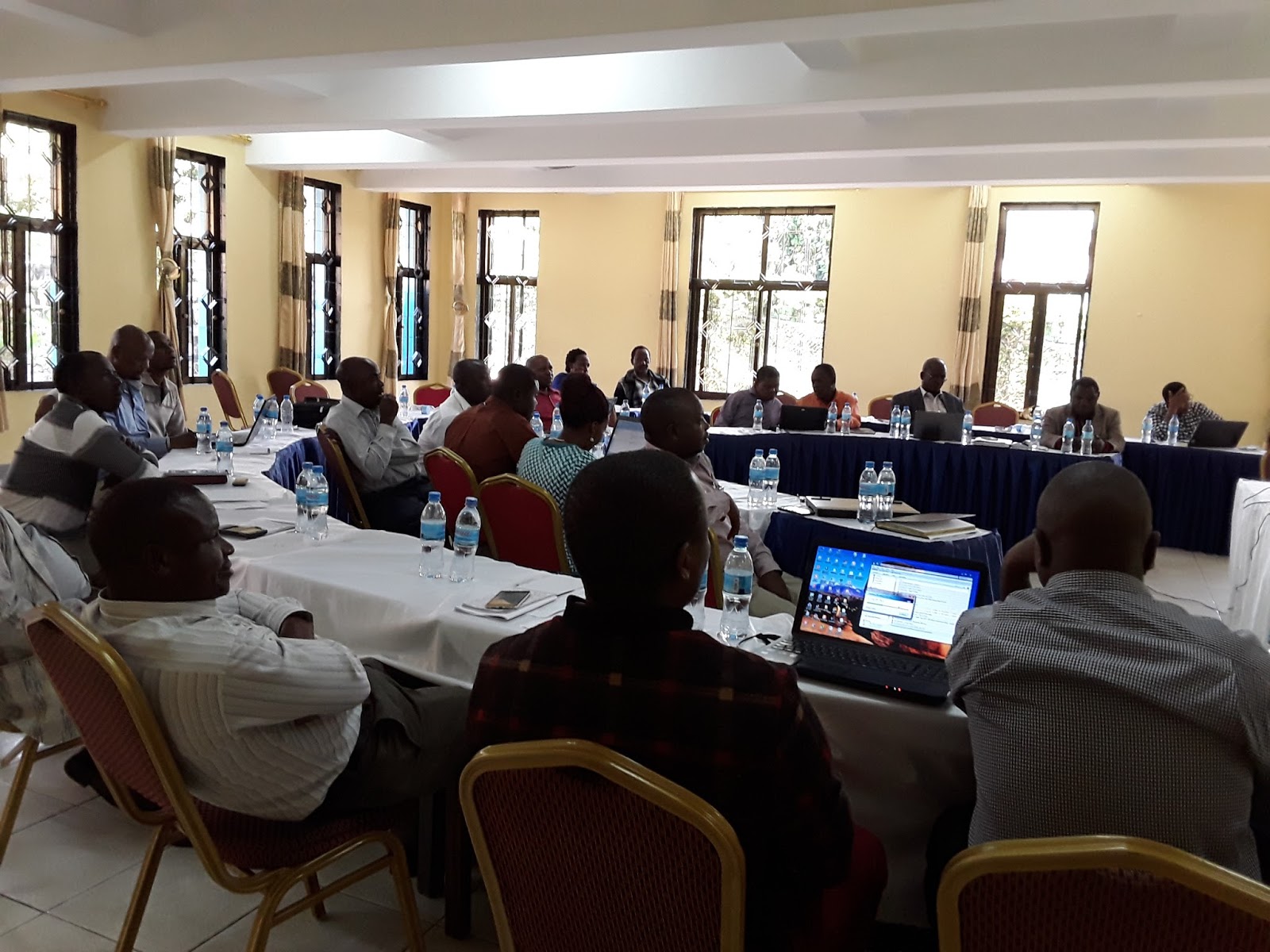
The essence of the stakeholders workshop which was concluded recently was to ensure that all parties involved in the agricultural value chain across the country  are well linked together, established for a sustainable mutual operation even long after the foreign partners are out of the programme. 

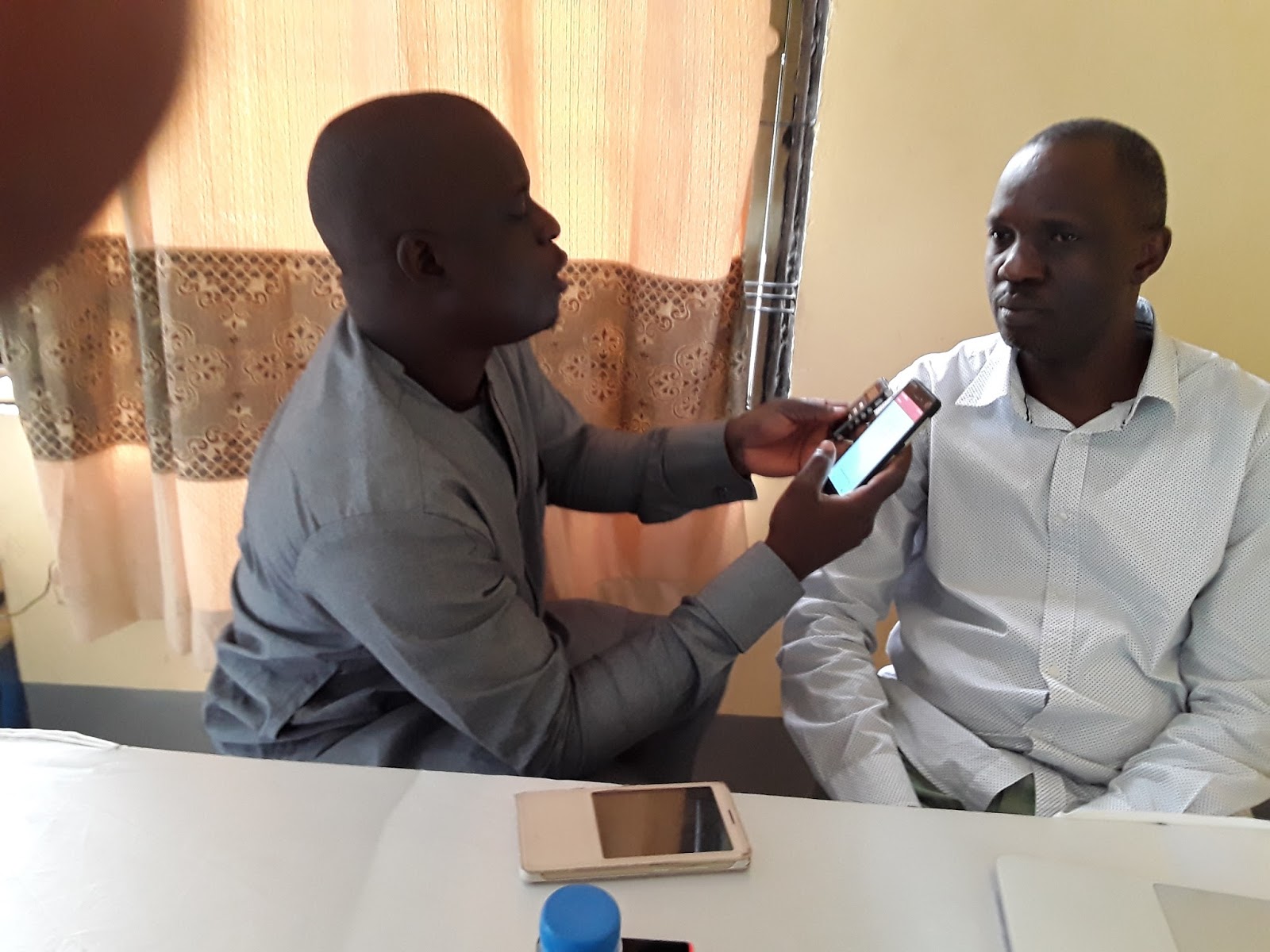
According  to Mr Leonard Muhoni, an Agri-business and Marketing specialist with MIVARF ,handling the Producer Empowerment and Marketing linkage component. Who spoke with Devcom Nigeria at the Nyakahoja Conference Centre,venue of the workshop in Mwanza,Mwanza Region of Tanzania, he said, "It is a stakeholders workshop which is more or less like an orientation workshop, following the extension of the programme for two years which ordinarily ended in December last year,so we gather all stakeholders together to chat the way forward in terms of orientation on how to implement the programme towards the end.

These includes officials from the Local Government Authorities, implementing agencies,Service Providers,private companies who are taking the capacity building to the smallholder producers,we also have officials from the regional offices, those who are dealing with the cooperative issues ,they are all represented here, we have representatives from the financial institutions who are also partner in the programme " Muhoni said.

Speaking about the approach being used to achieve result, he added, "Today we are looking at the consortium approach. This consortium approach is more of a trading platform where we have buyers or potential buyers who are not sure of where to get the produce,let's take paddy as an example, we have buyers and processors dealing in a large scale who find it it difficult to get their raw materials, in the other hand ,we have the smallholder producers who have difficulties understanding what the market is ,so,the programme is an ideal of having a platform where partners in this value chain come together, the sellers of farm inputs,financial service providers and the off takers,all meet together to trade ,whatever weakness any of the groups have within their enclave,take for instance, the smallholder farmer groups who are organised under Agricultural Marketing Cooperative Society, AMCOS or SACOS come up with their needs with the buyers at the platform level".

He also noted that they usually have their similar workshop quarterly, where they meet with various stakeholders to have a review of their activities, how well they are  achieving their set objectives.

Mr Muhoni enjoyed the participants to note  that they had come to the end of the programme, now that the programme had been extended for another two years,they had to do things differently and also consolidate on what they have achieved before in their various programmes especially Marketing Infrastructure, Value Addition and Rural Financing. 

"We are consolidating on all these and we are doing it through the consortium approach, then we are reviewing some areas,for example, we change the number of service providers we were working with and they will be working hand in hand with others and their specific activities which they will have to and they will have to understand what the marketing requirements for the season is,so they just have to work together.

We have done quite a lot, so, basically, we are consolidating on what has been done. There have been construction of roads,construction of other facilities, capacity building for the smallholder producers, a lot has been achieved so we are consolidating on all these",Muhoni reiterated. 


Speaking with Devcom Nigeria also, one of the participants, a service provider, from the Sengerema District, facilitating linking farmers to the market through consortium model,Mr. James Wembe , who also explained the consortium approach as a platform through which  the Lead Firms,the big Buyers plan with the farmers in advance the amount required based on market specification in terms of quantity,quality and frequency as well as mode of delivery.

'''They plan together base on the market need,then farmers start producing to meet the market requirements unlike in the traditional way where farmers produce without market specification, but base on this consortium model,  the plan start with the market,both farmers and buyer dialogue through what we call pre season meeting and find the market need,by this we mean the produce market,the farm produce market which will enable the farmers know the farm input require, maybe ,fertilizer, improved seeds. The quantity and variety as demanded by the buyer in advance base on market specification ,then the financial requirements and how to link them to the financial market. So, this things are interconnected,  they work in a collaborative way and through the consortium model which is a businesses collaborative meeting, all stakeholders come together to take advantage of the business opportunity",explained Mr Wembe.

 He stated further that before the introduction of the approach ,traditionally, people were struggling to improve productivity but through the consortium approach challenges faced by farmers on market including storage,transport and so on are taken care of. 

''Market requirement determines the production pattern, how much the buyer will need from the financial institutions and the financial institutions become a part of the model because this is business for everyone, so this is different from the traditional way where farmers were at the center but here market is at the center of everything. 


The model  according to Mr James reduces cost for all stakeholders, the farmers, the buyers,input suppliers,financial institutions and so on,instead of going around to meet individual which incurs more cost in terms of overhead, this is reduced because the consortium model brings everybody together''. 

Talking about significance of the workshop, he said the programme afforded them the opportunity of profiling all potential stakeholders, the off takers,AMCOS,,input providers in their areas,who and who are into what,what are the challenge, how can they work together, what assistance is needed from them,do they need capacity building, what role will the government play and so on.

''So the participants are going with this action plan,so when we have all this information it will help all stakeholders to be well equipped to take advantage of business opportunity even outside their region because they have information about other regions as well'',he maintained.

He explained further on the sustainability of the model that there was contractual agreement between producers and buyers  as they usually sign memorandum of understanding, so also between farmers and financial institutions, between farmers and input suppliers as well,AMCOS stands in for the farmers as a body under which farmer producer groups come together 

"Another form of checks is the collective marketing,nobody sells outside of the consortium arrangement ,when their produce come in after harvesting, the AMCOS ensure that the loan obtained from the financial institutions is refunded, all the payments pass through the account and deductions are made directly before the farmers get their balance.

In case of defaults the measure put in place for recovery is insurance not just for defaults alone but if anything goes wrong in a particular planting season,then we also have the government as a regulatory body",Wembe concluded. 

The participants were asked to profile potential stakeholders in their areas during  a brake out session as different speakers took turn to make their presentation with emphasis on the consortium approach. 

Various stakeholders from different regions in the country turned out for the workshop which lasted for weeks.

Friday, 20 April 2018

Agricultural Development in Tanzania: MIVARF Task Stakeholders on better practice


Agricultural Development in Tanzania: MIVARF Task Stakeholders on better practice 

By Temitope Musowo 

 According to Word Economic Forum 2016,Agriculture is a major source of revenue for the Tanzania government, contributing more than a quarter of the country's GDP, employing up to 80% of the workforce, and providing 85 % of the country's export.

After Tourism, Agriculture is another area of priority of the Tanzanian government,a sector that is enjoying the support  of different organisations both local and international.

Market Infrastructure Value Addition and Rural Finance (MIVARF) is one of such organisations supporting the development of agriculture in Tanzania. 

Through its programme being funded  by foreign partners like IFAD,ADB, which started about seven years ago,though, supposedly ended last year December.  Being extended for another two years,hence,the need for MIVIRF to bring together all stakeholders through a capacity building programme to do a review of the programme and chat a way forward for sustainability. 

The essence of the stakeholders workshop which started last week was to ensure that all parties involved in the agricultural value chain across the country  are well linked together, established for a sustainable mutual operation even long after the foreign partners back out of the programme. 

According  to Mr Leonard Muhoni, an Agri-business and Marketing specialist with MIVARF ,handling the Producer Empowerment and Marketing linkage component. Who spoke with Devcom Nigeria at the Nyakahoja Conference Centre,venue of the workshop in Mwanza,Mwanza Region of Tanzania, he said, "It is a stakeholders workshop which is more or less like an orientation workshop, following the extension of the programme for two years which ordinarily ended in December last year,so we gather all stakeholders together to chat the way forward in terms of orientation on how to implement the programme towards the end.

These includes officials from the Local Government Authorities, implementing agencies,service providers,consortia,pravate companies who are taking the capacity building to the smallholder producers,we also have officials from the regional offices, those who are dealing with the cooperative issues ,they are all represented here, we have representatives from the financial institutions who are also partner in the programme " Muhoni said.

Speaking about the approach being used to achieve result, he added, "Today we are looking at the consortium approach. This consortium approach is more of a trading platform where we have buyers or potential buyers who are not sure of where to get the produce,let's take paddy as an example, we have buyers and processors dealing in a large scale who find it it difficult to get their raw materials, in the other hand ,we have the smallholder producers who have difficulties understanding what the market is ,so,the programme is an ideal of having a platform where partners in this value chain come together, the sellers of farm inputs,financial service providers and the off takers,all meet together to trade ,whatever weakness any of the groups have within their enclave,take for instance, the smallholder farmer groups who are organised under Agricultural Marketing Cooperative Society, AMCOS or SACOS come up with their needs with the buyers at the platform level".

He also noted that they usually have their review workshop quarterly, where they meet with various stakeholders to have a review of their activities, how well they are  achieving their set objectives.

Mr Muhoni enjoyed the participants to note  that they had come to the end of the programme, now that the programme had been extended for another two years,they had to do things differently and also consolidate on what they have achieved before in their various programmes especially Marketing Infrastructure, Value Addition and Rural Financing. 

"We are consolidating on all these and we are doing it through the consortium approach, then we are reviewing some areas,for example, we change the number of service providers we were working with and they will be working hand in hand with others and their specific activities which they will have to and they will have to understand what the marketing requirements for the season is,so they just have to work together.

We have done quite a lot, so, basically, we are consolidating on what has been done. There have been construction of roads,construction of other facilities, capacity building for the smallholder producers, a lot has been achieved so we are consolidating on all these",Muhoni reiterated. 


Speaking with Devcom Nigeria,one of the participants, a service provider, from the Sengerema District, facilitating linking farmers to the market through consortium model,Mr. James Wembe , who also explained the consortium approach as a platform through which  the Lead Firms,the big Buyers plan with the farmers in advance the amount required besed on market specification in terms of quantity,quality and frequency as well as mode of delivery.

They plan together base on the market need,then farmers start producing to meet the market requirements unlike in the traditional way where farmers produce without market specification, but base on this consortium model,  the plan start with the market,both farmers and buyer dialogue through what we call pre season meeting and find the market need,by this we mean the produce market,the farm product market which will enable the farmers know the farm input require, maybe ,fertiliser, improved seeds. The quantity and variety as demanded by the buyer in advance base on market specification ,then the financial requirements and how to link them to the financial market. So, this thing are interconnected,  they work in a collaborative way and through the consortium model which is a businesses collaborative meeting all stakeholders come together to take advantage of the business opportunity",explained Mr Wembe.

 He stated further that before the introduction of the approach ,traditionally, people were struggling to improve productivity but through the consortium approach challenges faced by farmers on market including storage,transport and so on are taken care of. 

Market requirement determines the production pattern, how much the buyer will need from the financial institutions and the financial institutions become a part of the model because this is business for everyone, so this is different from the traditional way where farmers were at the centre but here market is at the centre of everything. 


The model  according to Mr James reduces cost for all stakeholders, the farmers, the buyers,input suppliers,financial institutions and so on,instead of going around to meet individual which incure more cost in terms of overhead, this is reduced because the consortium model brings everybody together. 

Talking about significance of the workshop he said the programme afforded them The opportunity profiling all potential stakeholders, the off takers,AMCOS,,input providers in their areas,who and who are into what,what are the challenge, how can they work together, what assistance is needed from them,do they need capacity building, what role will the government play and so on.

so the participants are going with this action plan,so when we have all this information it will help all stakeholders to be well equipped to take advantage of business opportunity even outside their region because they have information about other regions as well

He explained further on the sustainability of the model that there is contractual agreement between producers and buyers  ,they usually sign memorandum of understanding, so also between farmers and financial institutions, between farmers and input suppliers as well,AMCOS stands in for the farmers as a body under which farmer producer groups come together 

"Another form of checks is the collective marketing,nobody sells outside of the consortium arrangement ,when their produce come in after harvesting, the AMCOS ensure that the loan obtained from the financial institutions is refunded, all the payments pass through the account and deductions are made directly before the farmers get their balance.

In case of defaults the measure put in place for recovery is insurance not just for defaults alone but if anything goes wrong in a particular planting season,then we also have the government as a regulatory body",Wembe concluded. 

The participants were asked to profile potential stakeholders in their areas during  a brakeout session as different speakers took turn to make their presentation with emphasis on the consortium approach.